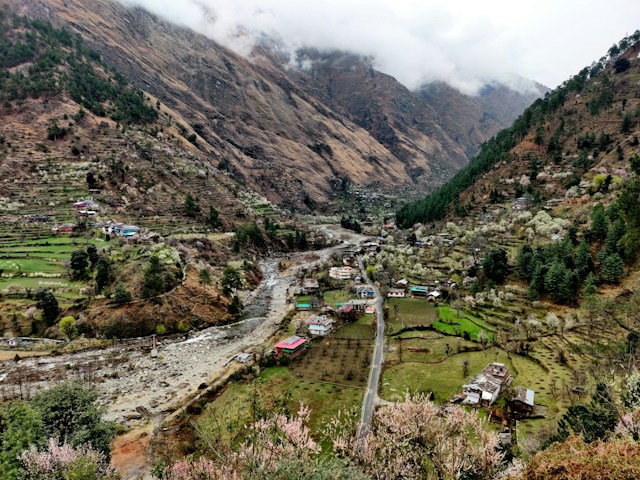
Tirthan Valley is a 25 to 30 km river valley running along the western boundary of the UNESCO World Heritage-listed Great Himalayan National Park (GHNP). Defined by a single river and a single road, the valley stretches from Banjar town down to Bathad at the park’s edge, passing through a string of quiet hamlets including Sai Ropa, Nagini, and Gushaini.
Key Highlights & Character
- The River & The Park: The emerald Tirthan River rises high in the GHNP backcountry near Tirth and flows down to meet the Beas River at Larji. The valley is widely renowned for trout fishing, buffer-zone forest walks, and direct park access.
- Slow Mountain Living: Represents the slowest pace in Kullu district—devoid of large commercial markets, crowded streets, or loud nightlife.
- Distinct Geographic Identity: While often grouped with Jibhi and Shoja (which sit on a parallel road leading up toward Jalori Pass), Tirthan Valley specifically refers to this quiet, riverside corridor.
Base Comparison Within the Valley
- Gushaini: Best for direct access to the GHNP gate (at Ropa) and the highest concentration of riverside homestays.
- Nagini: Best for convenient road access, popular dining options, and proximity to the Chhoie Waterfall trailhead.
- Sai Ropa: Best if you need immediate proximity to the Forest Department Tourist Centre and park permit office.
- Jibhi / Shoja (30 mins away): Choose these higher-elevation villages if you prefer lively cafes, social hubs, and diverse dining options while day-tripping into Tirthan Valley.
Travel Details & Recommendations
- Recommended Duration:3 to 4 nights (2 nights minimum; 1 night is too rushed due to travel time).
- Classic Itinerary:
- Day 1: Unwind by the river and enjoy local homestay meals.
- Day 2: Take a flat forest walk to the GHNP gate or go trout fishing.
- Day 3: Excursion to Jalori Pass, Serolsar Lake, or the nearby Chhoie Waterfall.