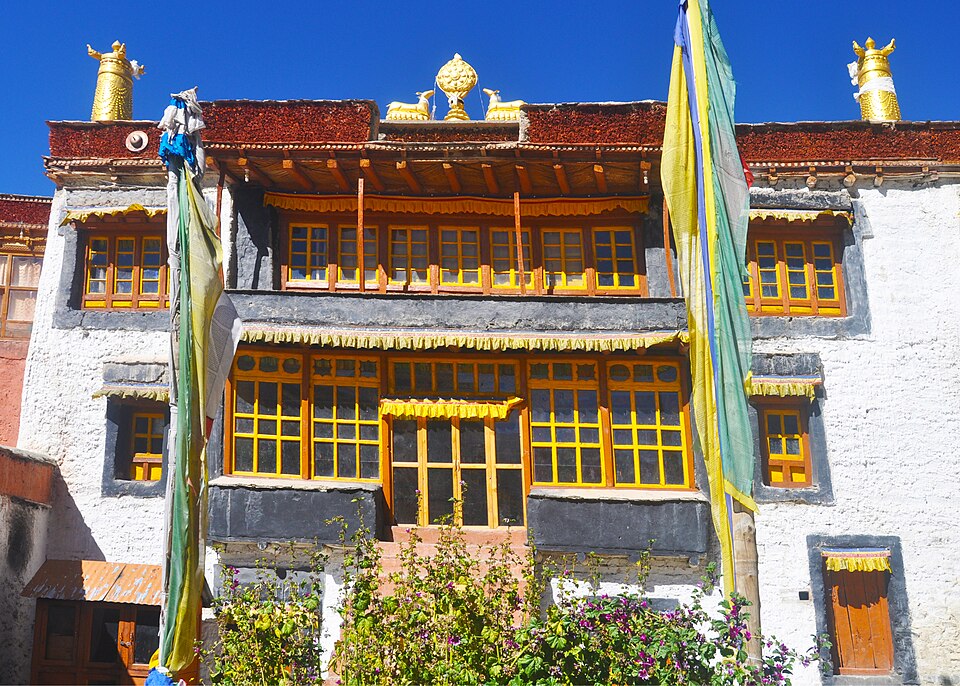
Perched dramatically on a rocky, vertical cliffside roughly 18 to 21 km north of Padum, Stongday Gompa Click to open side panel for more information is the second-largest Buddhist monastery in the Zanskar region. Founded in the 11th century by the Tibetan translator Marpa Lotsawa’s disciple, Naropa’s peer Marpa Sherab Senge, this sprawling whitewashed complex belongs to the Gelugpa (Yellow Hat) order and commands an awe-inspiring view over the expansive green fields and braided channels of the Zanskar River.
Key Highlights & What Makes It Special
- The Cliffside Amphitheatre: Built in a terraced, stepped formation directly into the sheer rock face, Stongdey resembles a medieval fortress clinging to the mountain. Navigating its stone staircases reveals multiple assembly halls (dukhangs), inner chapels, and rooftop courtyards overlooking the entire northern valley.
- Ancient Art and Relics: The monastery houses a rich collection of ancient murals, exquisite thangkas, and statues of protective deities. Several smaller temples within the complex preserve centuries-old artifacts and sacred texts.
- The Gustor Festival: If your travel dates align with late summer (typically July), you may witness the annual Stongdey Gustor, featuring sacred masked cham dances performed by the resident monks in the central courtyard.
Essential Things to Do
1. Explore the Multi-Tiered Complex and Rooftop Overlook
- The Uphill Climb: Reaching the monastery requires a steady, steep walk up from the base parking area along an unpaved, twisting path. At an altitude exceeding 3,600 metres, this vertical climb will test your lungs—pace yourself deliberately to avoid altitude headaches.
- Panoramic Vistas: Once inside, make your way to the upper courtyards and roof terraces. The vantage point provides an unobstructed 180-degree sweep of the Zanskar Valley floor, making it one of the best photography spots in the northern circuit.
2. Experience Active Monastic Life
- Respectful Observation: Stongdey is a living spiritual home for roughly 60 resident monks rather than a static museum. Visitors are welcome in the main courtyards and public assembly halls, but keep conversations quiet and always seek permission before photographing monks or private prayer rooms.
Logistical Realities & Safety Rules
- No Commercial Infrastructure: There are no ticket counters, official guides, restrooms, or cafes at the monastery. Carry your own water and supplies from Padum before heading out.
- Exposed Elements: Perched high on an open cliff, the complex acts as a natural wind funnel. Even on warm summer afternoons, sudden alpine gusts can drop temperatures quickly. Bring a windproof layer.
- Restricted Sanctums: While general prayer halls are open, certain inner meditation cells and private quarters are strictly off-limits to tourists. Obey all signage and respect monastic boundaries.
Travel Details & Practical Info
- Recommended Duration: 2 to 3 hours (Including the climb from the parking level, exploring the multiple temple levels, and taking in the valley views from the roof).
- Best Time to Visit: Mid-afternoon provides striking golden-hour lighting across the valley floor and illuminates the whitewashed walls against the barren brown slopes.
- How to Get There: Easily accessible via a 40-to-50-minute drive north from Padum along the valley loop road. It is commonly paired with a visit to nearby Karsha Monastery on a single day trip.
- Honest Framing: Stongday Gompa Click to open side panel for more information demands physical effort due to its steep, high-altitude climb, but rewards visitors with raw architectural beauty, deep spiritual history, and some of the most commanding panoramic views in Zanskar.