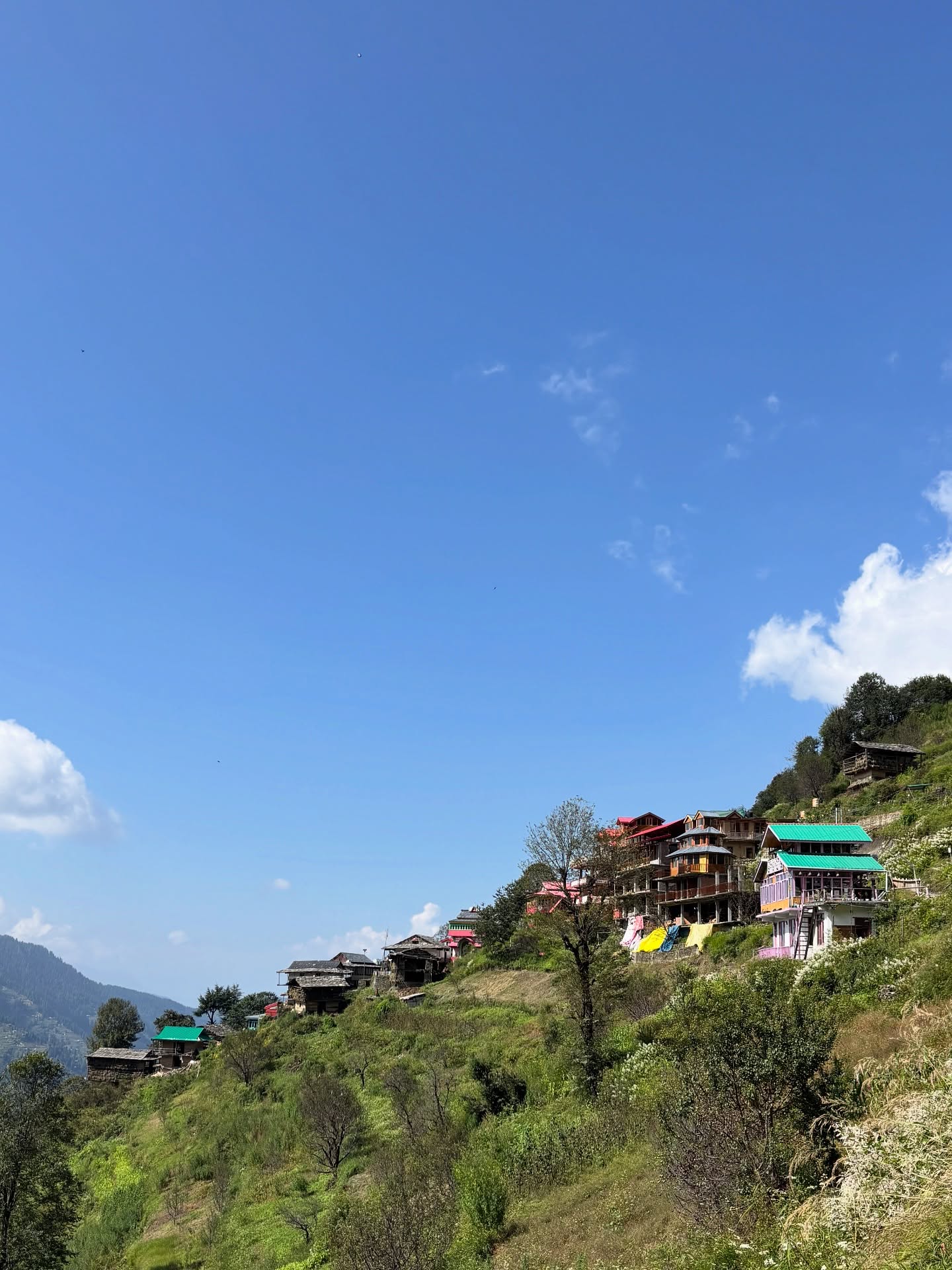
Perched at an elevation of roughly 2,700 metres on the road between Jibhi and Jalori Pass (about 5 km below the pass), Shoja is a peaceful high-altitude hamlet wrapped in dense deodar forest. It serves as an ideal elevated base for travelers exploring the Jalori Pass trails who prefer quiet mountain nights over the busier village vibe below.
Key Highlights & Character
- High Altitude & Crisp Mountain Climate: Sitting considerably higher than Jibhi, Shoja is noticeably colder at night, receives reliable winter snowfall, and provides sweeping valley viewpoints.
- Proximity to Jalori Trails: Located just a 15 to 20-minute drive from Jalori Pass, making it the most strategic jumping-off point for early-morning hikes to Serolsar Lake or Raghupur Fort.
- Unplugged Mountain Setting: Defined by stone-and-timber homes, deodar forests, an old Forest Rest House, and an absence of commercial market streets or loud evening venues.
Shoja vs. Jibhi
- Shoja: Higher altitude, quiet evenings, immediate trailhead access, and total forest silence. Best for hikers, readers, couples, and travelers seeking rest.
- Jibhi: Lower elevation, lively cafe culture, diverse food options, hostels, and social evening scenes. Best for cafe-hopping and broader social amenities.
Travel Details & Practical Info
- Recommended Duration:2 to 3 nights (1 night feels rushed due to travel time and packing).
- Classic Itinerary:
- Day 1: Relax on a wooden balcony overlooking the deodar forest and settle in.
- Day 2: Take a morning drive to Jalori Pass for the Serolsar Lake or Raghupur Fort day walks.
- Day 3: Explore nearby attractions like Jibhi Waterfall or the Kath Kuni tower at Chehni Kothi.
- Accommodations: A mix of family-run homestays (₹1,500–₹3,500/night) and a few boutique backpacker hostels (dorm beds ~₹700–₹1,000/night). Advance booking is highly recommended during peak season due to limited room capacity.