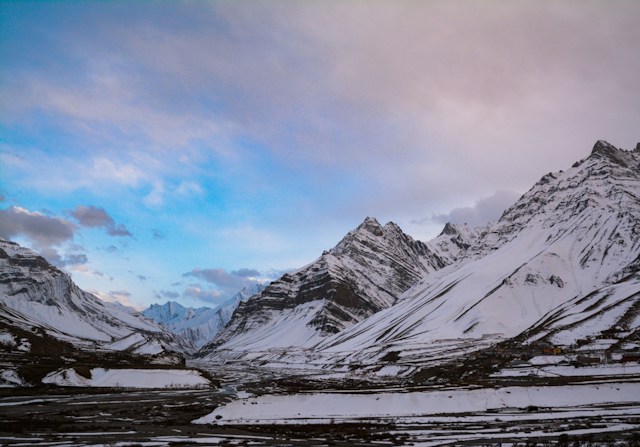
Established in 1987, Pin Valley National Park protects a rugged Trans-Himalayan cold desert ecosystem situated in the southern part of Spiti. Spanning a core zone of roughly 675 sq km and a buffer of 1,150 sq km, the park ranges in altitude from 3,500 metres to over 6,000 metres on its jagged mountain ridges, serving as a critical natural habitat for snow leopards, Siberian ibex, and native alpine wildlife.
Key Highlights & Scenery
- The Green Contrast: Offering a lush contrast to the stark, barren landscapes of central Spiti, the Pin River valley features vibrant green fields of barley and peas, poplar-lined roads, and softer, picturesque farming settlements.
- Ecological Corridor: It links with the Great Himalayan National Park on the Kullu side and the Rupi Bhaba Sanctuary in Kinnaur, forming a massive continuous high-altitude conservation zone.
- Buffer Zone vs. Park Interior: While most visitors experience the buffer zone (driving along the scenic road to Mud Village), the true park interior beyond Mikkim is strictly a foot-access wilderness requiring suspension-bridge crossings and guided hiking.
Travel Styles & Recommendations
- Day Trip or Overnight: A day trip from Kaza is possible, but staying 1 night in Mud Village is the sweet spot for experiencing the valley’s dramatic evening light, starlit skies, and crisp morning air.
- Deep Park Exploration: Dedicated trekkers can venture deep into the core zone on multi-day expeditions (3+ days) with a licensed local guide.
- When to Skip: If your Spiti itinerary is severely restricted (under 5 days), it is wiser to bypass the Pin Valley detour and focus your time around Kaza, Key Monastery, and Langza.
Travel Details & Practical Info
- Recommended Duration:
- 1 Day for a round-trip drive from Kaza to Mud Village.
- 1 Night in Mud Village for a relaxed, immersive stay.
- 3+ Days for serious interior park trekking.
- Access Point: The motorable road terminates at park-edge villages like Mikkim and Mud. Interior exploration beyond these points is exclusively on foot.