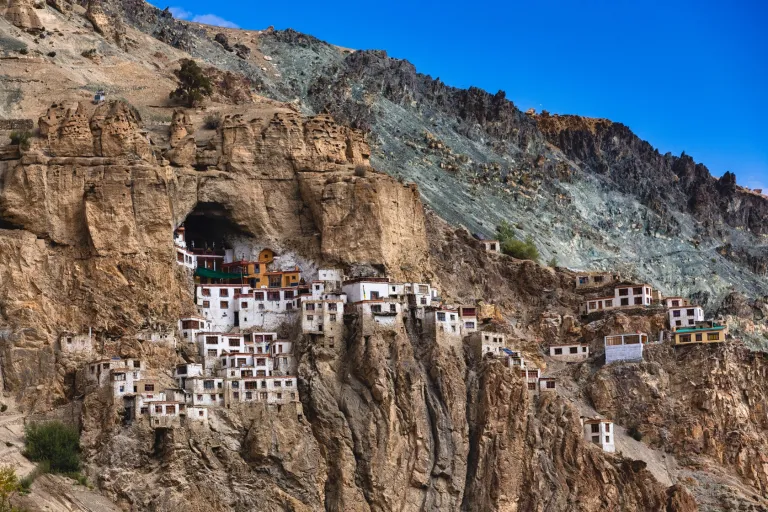
Perched entirely inside a massive, natural vertical cliffside cave high above a gorge of the Lungnak River, Phukthal Gompa Click to open side panel for more information is arguably the most visually striking and isolated monastery in the entire Himalayan region. Founded in the early 12th century by early Tibetan Buddhist teachers and later affiliated with the Gelugpa order, this honeycomb-like mud-brick and timber structure clings precariously to the rock face, resembling a giant bird’s nest suspended over an abyss.
Key Highlights & What Makes It Special
- The Cliffside Cave Masterpiece: Unlike monasteries built on ridges or open slopes, Phugtal is built directly into and around a deep cavern where a sacred spring flows. The juxtaposition of whitewashed prayer halls against the raw, wind-eroded red and grey cave rock is breathtaking.
- Complete Geographic Isolation: Phugtal cannot be accessed by a casual drive; it demands a dedicated, multi-hour trek across rugged footpaths, keeping it entirely free of standard mass-tourism crowds.
- Active Monastic Sanctuary: It remains a thriving, self-sustaining spiritual community for around 70 resident monks and lamas who live, study, and pray in total isolation from the modern world for months at a time.
Essential Things to Do
1. Undertake the Lungnak Gorge Foot Trek
- The Approach: Since road connectivity ends at nearby staging hamlets (such as Cha or Purne), reaching the monastery requires a 2 to 3-hour one-way hike (roughly 6 to 7 km each way) along an undulating, cliff-edge trail carved into the gorge above the roaring river.
- Pacing at Altitude: Starting at elevations exceeding 3,800 to 4,000 metres, even a moderate hike demands strict self-pacing. Carry trekking poles and ensure you are fully acclimatized before attempting the trail.
2. Cross the Suspension Bridge & Explore the Cave Complex
- The Final Approach: The trail culminates at a dramatic suspension bridge spanning the gorge, followed by a steep final climb up stone steps to the main cave entrance.
- Inside the Sanctuary: Explore the ancient assembly halls, prayer rooms decorated with centuries-old thangkas and wall paintings, and the sacred spring cave that gives the monastery its spiritual foundation.
Logistical Realities & Safety Rules
- Zero Direct Vehicle Access: Do not expect to drive up to the gates. You must park your vehicle at the roadhead village (Purne or Cha) and walk.
- Basic Overnight Options: If you plan to stay overnight to experience the silence of the gorge, accommodations are limited to basic village homestays or rustic pilgrim rooms at Purne/Cha. Do not expect luxury amenities, reliable electricity, or continuous mobile network coverage.
- No Commercial Infrastructure: There are no restaurants or shops along the hiking trail. Carry all drinking water, energy snacks, and personal medical supplies with you from Padum or your base.
- Trail Safety: The path involves exposed cliff sections, loose gravel, and strong valley winds. Wear sturdy, high-traction hiking boots and avoid the route during active rockfall conditions or severe weather.
Travel Details & Practical Info
- Recommended Duration: 1 full day (A 5 to 6-hour round-trip hike plus 1 to 2 hours exploring the monastery complex).
- Best Season: June to September, when the access roads through Zanskar are open and the footpaths are clear of snow and ice.
- How to Get There: Drive roughly 70 km south-southeast from Padum along the developing Nimmu-Padum-Darcha (NPD) corridor toward Purne, then hike the remaining distance on foot.
- Honest Framing: Visiting Phukthal Gompa Click to open side panel for more information is a genuine expedition that requires physical stamina, preparation, and respect for isolation. It is not a quick roadside photo stop, but for travelers willing to put in the miles, it is the ultimate destination in Zanskar.