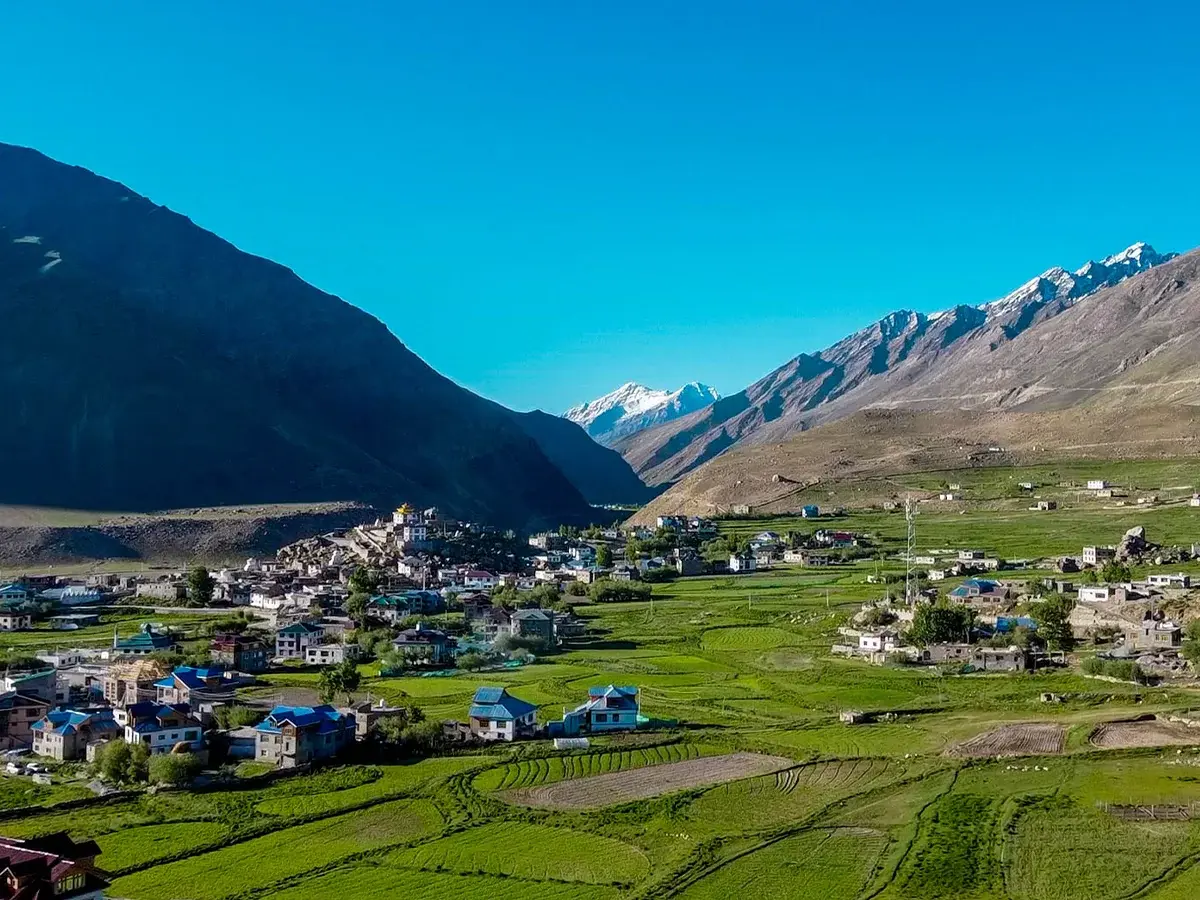
Sitting at an elevation of roughly 3,400 metres (11,155 ft), Padum is the economic, administrative, and cultural capital of the Zanskar Valley. Nestled in a sweeping triangular basin where the Stod (Doda) and Tsarap (Lungnak) rivers meet, Padum has evolved rapidly from an isolated high-altitude outpost into a major regional hub, thanks to the opening and black-topping of all-weather strategic highways like the Nimmu-Padum-Darcha (NPD) corridor and the Kargil-Padum road (NH301).
Key Highlights & Atmosphere
- A Crossroads of Culture & History: Unlike homogeneous mountain towns, Padum features a unique cultural syncretism: ancient Tibetan Buddhist gompas and stupa fields coexist alongside a vibrant, long-standing Muslim community in the lower market.
- The Royal Past: The historic core of Padum features the crumbling ruins of the ancient Mud Palace of the Zanskar King perched on a central rock pinnacle.
- Gateway to Zanskar’s Monasteries: Padum serves as the ultimate base camp for exploring some of the most dramatic cliffside and ridge-top monasteries in the Himalayas, including Karsha, Stongdey, Bardan, and Phugtal.
Essential Things to Do Around Padum
1. Tour the Great Monasteries Circuit
- Karsha Monastery (~9–14 km north): The largest monastery in Zanskar, belonging to the Gelugpa order. It spills down a terraced hillside, housing over 100 monks and ancient murals. Visit in the late afternoon for sweeping golden-hour views of the valley floor.
- Stongdey Monastery (~18–21 km away): Perched high on a rocky ridge, it offers stunning 180-degree valley views, beautiful assembly halls, and well-preserved wall paintings.
- Phugtal Monastery (The Cave Trek): Located deep in the Lungnak Valley, this iconic 12th-century monastery is literally built into a massive cliffside cave like a honeycomb. Reality Check: You cannot drive here; it requires a dedicated multi-hour trek from the nearest roadhead, making it a serious commitment rewarded by absolute isolation.
2. Explore Local Heritage & Rock Carvings
- 8th-Century Dhyani Buddha Carvings: Located on a large boulder near the riverbank below the old town along the Tsarap road, these ancient rock reliefs point to centuries of early Buddhist presence.
- Sani Monastery & Lake: Located about 6 km from Padum, Sani is believed to be one of the oldest religious sites in Ladakh, featuring a peaceful adjacent lake and historic stone relics.
Logistical Realities & Survival Rules
- The 100% Cash Mandate: Do not rely on digital payments (UPI) or credit cards for day-to-day expenses outside a few hotels in Padum proper. While SBI and J&K Bank branches and ATMs exist in the main market, ATMs frequently run out of cash or lose connectivity. Always carry adequate physical cash withdrawn from Leh or Kargil.
- Fuel Hub: Padum features an Indian Oil Petrol Pump (located on the northern bypass/Stod road), which is a vital lifeline. However, it operates on cash or manual systems and can occasionally face dry spells; always top up when you can.
- Connectivity: BSNL and Airtel offer workable 4G data in and around Padum town, but mobile signals vanish completely once you venture into the surrounding gorges or toward Phugtal.
- Medical Infrastructure: Padum houses the Sub-District Hospital (SDH Padum) with an emergency ward, oxygen cylinders, and trauma care, serving as the primary medical safety net in the valley.
Travel Details & Practical Info
- Recommended Duration: 3 to 4 nights minimum. Spend 1 day acclimating and exploring Padum town/Sani, 1 day on the Karsha-Stongdey-Zangla monastery loop, and additional days if attempting deep treks like Phugtal.
- Best Season: June to September is the reliable window when roads from Kargil and Manali/Shinku La are clear of snow and mountain passes are open. Winter brings sub-zero temperatures (-20°C or lower) and heavy snow that cuts off road access entirely, leaving only extreme expeditions like the frozen-river Chadar Trek.
- Honest Framing: Padum is no longer a cut-off medieval ghost town—it is a fast-developing regional hub with basic mechanical shops, hotels, and restaurants. Treat it as your operational base camp for deep exploration into Zanskar’s raw mountain wilderness, rather than a luxury resort town.