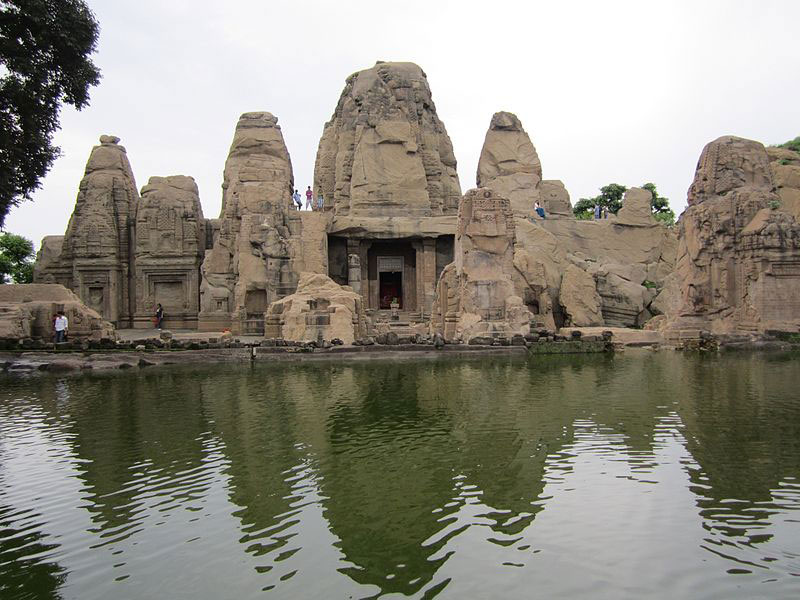
Located roughly 40 kilometres southwest of Dharamshala at an elevation of around 800 metres (2,620 ft), the Masroor Rock-cut Temple Click to open side panel for more information (often called the “Himalayan Pyramid”) is an archaeological marvel dating back to the 8th century. Carved entirely out of a single monolithic sandstone hill, this complex represents the Nagara style of rock-cut architecture—echoing famous structures like Ellora or Cambodia’s Angkor Wat, though on a more intimate scale.
Key Highlights & What Makes It Special
- The Monolithic Masterpiece: Unlike masonry structures built stone by stone, the entire temple complex was sculpted subtractive-style directly out of a live rock ridge, featuring intricate friezes, pillars, and lintels depicting Hindu epics.
- The Sacred Water Tank: Directly in front of the main shrine sits a large, rectangular rock-cut water reservoir (puskarini) that mirrors the carved facade, offering a striking visual composition.
- Dhauladhar and Valley Backdrop: Positioned on a low ridge overlooking the sprawling agricultural fields of the Kangra Valley, the temple upper tiers offer a wide-angle perspective of the distant snow peaks.
Essential Things to Do
1. Explore the Carved Sanctuaries and Upper Terraces
- Architectural Navigation: Walk through the surviving entrance portals and central shrines to examine the detailed stone carvings.
- Climbing Caution: While parts of the upper roof tiers offer sweeping views, exercise extreme caution: centuries of weathering, earthquake damage (particularly the severe 1905 Kangra earthquake), and uncompleted sections mean some stone staircases and floors are uneven or fragile.
2. Photography and Structural Study
- Best Light: Morning or late afternoon provides ideal raking light across the sandstone facade, highlighting the intricate depth of the eighth-century carvings.
Logistical Realities & Safety Rules
- Off-the-Beaten-Track Isolation: Unlike the bustling hubs of McLeod Ganj, Masroor is relatively isolated. There are no major commercial centers, luxury resorts, or extensive dining options right at the site; you must plan meals and transport accordingly.
- Earthquake Restoration Realities: Much of the complex remains in a ruined, fragmented state due to seismic activity over the centuries. Do not expect a polished, pristine amusement park—it is a protected archaeological site managed by the ASI (Archaeological Survey of India).
- Sun and Heat Exposure: Sitting down in the Kangra Valley basin rather than the high mountains, temperatures here can be significantly warmer and more exposed than Dharamshala. Bring a hat, sunglasses, and drinking water.
Travel Details & Practical Info
- Recommended Duration:1.5 to 2 hours (Sufficient time to explore the monolithic complex, view the water tank, and study the carvings).
- Best Season:October to March for pleasant, warm daytime weather. (Avoid peak summer afternoons in May–June when valley heat can be intense).
- How to Get There: Roughly a 1.5-hour drive south from Dharamshala or Kangra town. Most visitors hire a private taxi for a half-day round trip.
- Honest Framing: Masroor Rock-cut Temple Click to open side panel for more information is a profound, historically significant archaeological site rather than a bustling tourist entertainment center. Go for the rare rock-cut architecture, the peaceful rural setting, and a glimpse into ancient Himalayan craftsmanship.