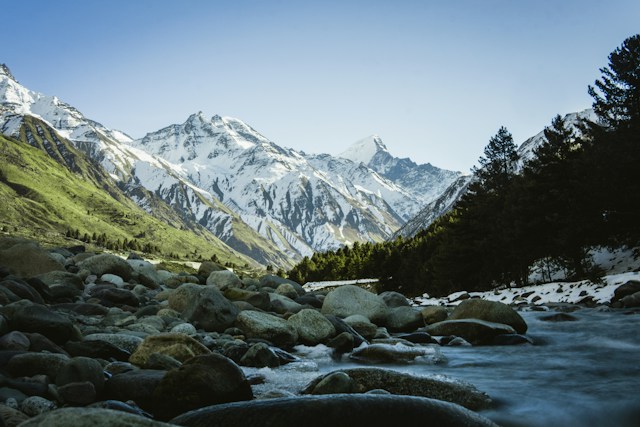
Situated at an altitude of 3,450 metres, Chitkul is famed as the last inhabited village on the Indian side of the Indo-Tibetan border before the ITBP checkpost. It sits at the end of the Baspa Valley road, flanked by the fast-flowing Baspa River, terraced potato fields, and towering mountain ranges on three sides.
Key Highlights
- Cleanest Air in India: Backed by an IIT Delhi study, Chitkul boasts exceptionally pure, sharp, and clean air, untouched by industrial pollution or traffic.|
- Mathi Devi Temple: A ~500-year-old temple complex built in traditional Kathkuni timber-and-stone style using walnut wood. It houses the sacred ark of Goddess Mathi, the presiding deity of the village.
- Kagyupa Buddhist Temple: A smaller, tranquil temple featuring an ancient image of Shakyamuni Buddha and carved wooden doors, showcasing Kinnaur’s seamless Hindu-Buddhist cultural harmony.
- Hindustan Ka Akhri Dhaba: A famous local eatery and photo spot with a hand-painted signboard marking it near the end of the Indian road. Popular for basic comfort food like rajma chawal, Maggi, and hot tea.
Travel Details & Recommendations
- How to Reach: A 25 km drive from Sangla along the scenic Baspa Valley. The journey passes through the peaceful hamlet of Rakcham, where orchards thin out and the valley dramatically narrows.
- Recommended Duration:
- 2 to 3 Hours (Day Trip): Sufficient time to walk through the village lanes, visit both temples, take photos at the Akhri Dhaba signboard, and walk down to the river.
- 1 Night (Overnight Stay): Ideal if you want to experience the tranquil atmosphere after day-trippers leave in the late afternoon, enjoy starlit skies, and hear the Baspa River at night.
- Who It’s For: Travelers who appreciate quiet border landscapes, pristine nature, and authentic Himalayan village culture.