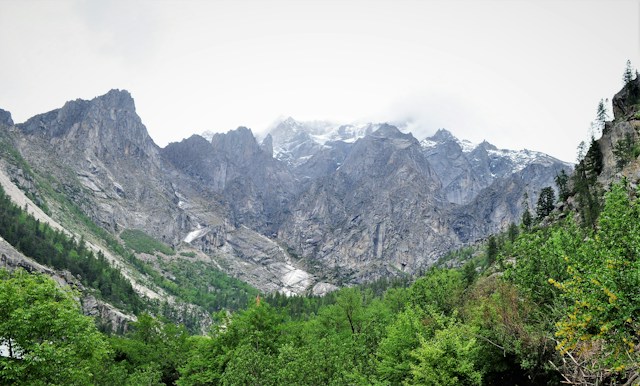
Technically the Baspa Valley, this region branches off the main Kinnaur highway at Karcham and follows the Baspa River northeast toward Chitkul. Known for its changing glacial waters, vast apple orchards, and rich heritage, it is one of the most accessible and culturally vibrant valleys in Kinnaur.
Key Highlights & Attractions
- The Baspa River & Apple Orchards: The Baspa River shifts in color from milky turquoise in the morning to grey-green by afternoon. In autumn (late August to October), the valley is filled with heavy-laden Kinnaur Golden and Royal Delicious apple orchards.
- Kamru Fort: Positioned on a rocky spur above Sangla town, this ~1,000-year-old fort features a 5-storey wooden tower that served as the original seat of the Bushahr dynasty. It houses a shrine dedicated to Kamakhya Devi (traditionally believed to have been brought from Guwahati).
- Traditional Villages & Kathkuni Architecture: Villages like Sangla, Batseri, Rakcham, and Chitkul feature earthquake-resistant Kathkuni construction (stacked stone interlocked with deodar timber) with slate roofs and carved wooden balconies.
- Seamless Cultural Blend: Hindu temples (such as Bering Nag in Sangla and Mathi Devi near Chitkul) sit comfortably alongside Buddhist prayer flags and monastery shrines.
Travel Details & Recommendations
- Getting There & Road Conditions:
- Located roughly 230–240 km from Shimla (8 to 10 hours by road).
- The highway passes through the dramatic Tranda Dhank stretch—a narrow shelf carved directly into a sheer cliff high above the Sutlej River. Drive slowly, during daylight hours, and with an experienced driver.
- Ideal Duration:
- 2 to 3 Nights: The ideal duration. Allows time to explore Kamru Fort, take a day trip to Chitkul, walk through Batseri village, and relax by the river in Rakcham.
- Family Travel: An excellent option for families due to the moderate altitude (~2,600 m) and easy valley walks. Pack warm layers for Chitkul, as it gets cold even in summer.