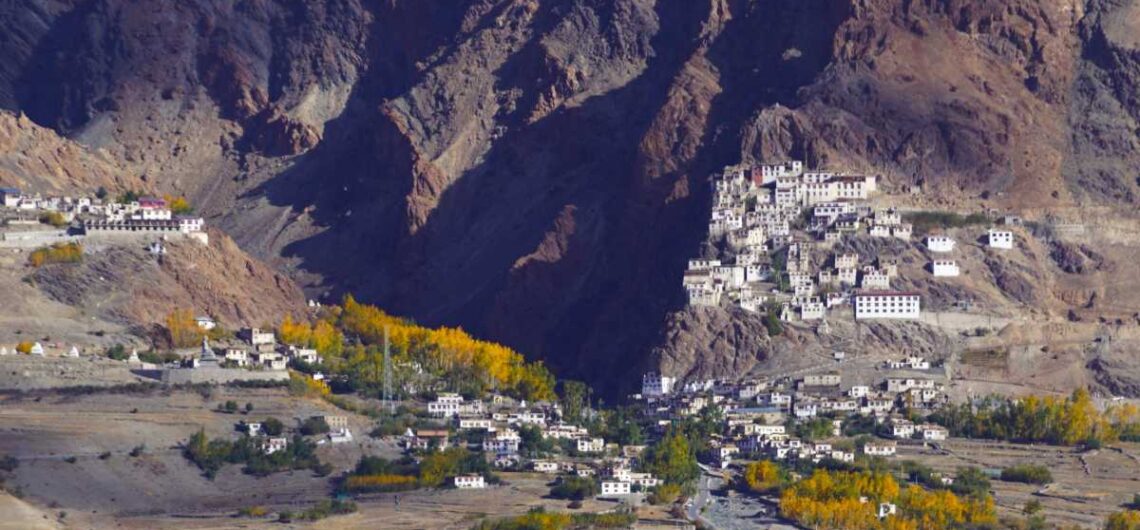
Perched dramatically on a steep, terraced hillside about 9 to 14 km north of Padum, Karsha Gompa is the largest and most influential Buddhist monastery in the entire Zanskar region. Belonging to the Gelugpa (Yellow Hat) order, this sprawling whitewashed complex spills down a massive rock face, housing over 100 resident monks, ancient assembly halls, and historic courtyards overlooking the wide Zanskar Valley floor.
Key Highlights & What Makes It Special
- The Architectural Amphitheatre: Unlike isolated flat-roofed temples, Karsha is built in a cascading terraced layout that resembles a fortress carved right into the mountain. Walking its narrow stone paths and multi-level rooftops offers sweeping, 180-degree views of the irrigated green fields against stark brown badlands.
- Ancient Murals and Relics: The oldest parts of the complex house exquisite wall paintings, sacred thankas, and statues dating back centuries, reflecting deep artistic ties to Ladakh’s broader Buddhist heritage.
- The Gustor Festival: If your travel dates align with summer (usually held around July), you may witness the annual Karsha Gustor festival, featuring traditional masked cham dances performed by the monks in the main courtyard.
Practical Realities & Honest Framing
- The Climb is No Joke: Karsha is built on a steep vertical slope. Walking up from the base parking area or navigating the stone staircases between prayer halls involves significant physical effort at over 3,500 metres altitude. Pace yourself to avoid altitude sickness.
- Active Working Monastery: This is not a static museum. It is a living spiritual home for the monastic community. Keep voices low, respect resident monks, and always ask permission before taking photographs inside prayer halls or capturing portraits of individuals.
- Restricted Sanctums: While visitors are welcome in the main courtyards and assembly halls (dukhang), certain inner chambers, private quarters, and storage rooms are strictly off-limits to tourists. Always look for signage or follow monk guidance.
Travel Details & Practical Info
- Recommended Duration: 2 to 3 hours. This allows enough time to climb through the multi-tiered complex, explore the main assembly halls, and spend time on the roof terraces taking in the valley views.
- Best Time to Visit: Mid-afternoon provides striking golden-hour lighting across the valley floor, making it ideal for photography.
- How to Get There: Easily accessible via a short 30-to-40-minute drive from Padum along the valley road. Taxis can be hired easily in Padum for a round-trip loop that often combines Karsha with nearby Stongdey.
Have you finalized your dates for the Zanskar circuit, or are you mapping out connecting routes from the Manali-Padum highway?