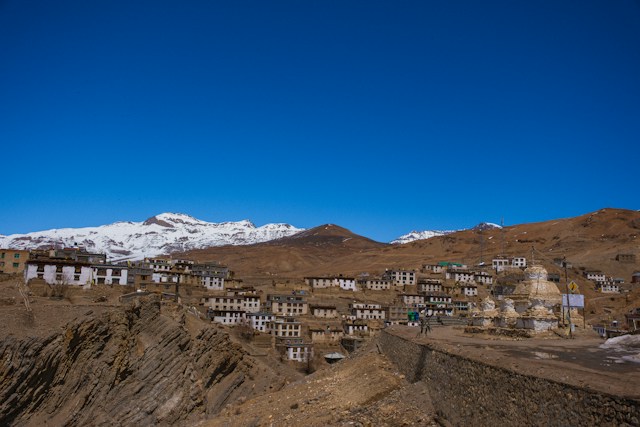
Perched on a wide, treeless shelf at an altitude of approximately 4,270 metres just past Key Monastery, Kibber is a traditional Spitian settlement composed of 80 to 100 stone-and-mud houses. Framed by prayer flags, roaming livestock, and expansive high-altitude views, it serves as a gateway to deep mountain wilderness and wildlife conservation.
Key Highlights & Atmosphere
- High-Altitude Settlement: Once globally famous as the “highest motorable village with electricity,” its precise elevation and title are now contested by higher hamlets like Komic and Hikkim. The real draw is its stark, beautiful geography rather than titles.
- Wildlife Sanctuary & Snow Leopard Hub: Surrounded by the Kibber Wildlife Sanctuary, it is renowned globally as a premier winter base (November to February) for guided snow leopard tracking expeditions with trained local spotters.
- Proximity to Chicham Bridge: Positioned just a short drive away from the dizzying, engineering marvel of the Chicham Bridge suspended high above a deep gorge.
Travel Styles & Recommendations
- Day Trip Version: Typically paired with a morning visit to Key Monastery from Kaza, taking about 30 to 45 minutes to walk through the village lanes and check out the local monastery.
- Overnight Stay Version: Staying a night in a local family homestay lets you experience the quiet village atmosphere after all tourist vehicles depart, accompanied by crisp night skies and sunrise over the valley.
- Acclimatization Warning: Because of its extreme altitude (over 4,200m), ensure you are well-acclimatized in Kaza for a couple of days before spending the night here.
Travel Details & Practical Info
- Recommended Duration:
- Half Day if combining with Key Monastery and Chicham Bridge from Kaza.
- 1 Night for travelers looking to experience slow Spitian village life.
- 5 to 10 Days if undertaking a specialized winter wildlife expedition.
- Accommodation: A handful of authentic, family-run homestays offering simple mud-walled rooms, thick wool blankets, and home-cooked meals. Advance booking is recommended during peak summer months (July–August).